Saturday, March 10, 2012

Kingsnorth: Molycorp Move Will Ignite Rare Earths Demand

Published on Saturday March 10 2012 (AEST)
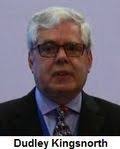


The Molycorp-Neo Materials deal means back to the drawing board for Dudley Kingsnorth. RareMetalBlog publisher Tracy Weslosky was on the nail to call the takeover by Molycorp of Neo Materials a game changer.

So far as Dudley Kingsnorth, Australia’s leading rare earths expert is concerned, it is just that, and has certainly guaranteed that all the future outlook for REE demand will have to be recalibrated. So much so, in fact, that he says that his next demand outlook projections will be dramatically different from the ones issued just last month.


There’s still be a shortage of heavy rare earths, but he feels it is going to be a much harder hill to climb for competing light rare earth hopefuls once the combined-Molycorp-Neo operation hits its stride. He says Molycorp will now be moving to its 40,000 tonnes a year target much more quickly than expected - perhaps it might be just over three years away.

But Dudley sees a far more important consequence of the takeover which means a true mines-to-magnets operation. That is, a kick-start to demand and rising use of rare earths.

The reason? End users have spent considerable sums of money on finding ways to lighten their dependence on REE - what Dudley has termed “replace, reduce or recycle”. They won’t need to do that now: they know that the rare earth supplies will be available from a non-China source, so they can forge ahead with developing new applications.

(This is the same concept that is driving Australia’s Metallica Minerals with its scandium project. The world uses only a few tonnes a year of scandium mainly because it is in such short supply; guarantee plentiful supply, Metallica reckons, and new applications will emerge.)

Just this week we heard of Japan’s new Sendai Material Valley project. This is an effort to turn the Tohoku region into a world-class centre for material industries, with a focus on the development of next-generation automotive materials, including emission catalysts that do not need rare earths or critical metals. [My emphasis]

Dudley thinks that Molycorp will not only be in a position to guarantee supply, but to guarantee prices (perhaps for up to five years). No one has yet been able to do either, and certainly not both.

He thinks the Molycorp move will be widely welcomed.


Click Image To Access Uranium Stocks Australia


VISIT MY OTHER SITE
@

Monday, March 5, 2012

Northern Minerals - Browns Range Trial Processing By Nagrom

Published on Monday March 05 2012 (AEST)


Click Image To Access Uranium Stocks Australia


VISIT MY OTHER SITE
@

Thursday, March 1, 2012

Extract Resources Directors Back $2.38bn Chinese Takeover Bid

Published on Thursday March 01 2012 (AEST)

The independent directors of Extract Resources, owner of one of the world's largest uranium mines, have backed a takeover offer from China Guangdong Nuclear Power Corp (CGNPC) that values it at A$2.2 billion ($2.38 billion).

The recommendation for the A$8.65 a share offer, was made after Extract failed to uncover any rival bidders and takes CGNPC a step closer to winning control of the giant Husab uranium project in Namibia.

"After a lengthy and exhaustive process, as at today, no alternative and superior proposal has been received, nor are there any discussions underway with third parties," Extract said in a statement.

In a complex deal, CGNPC -- which is bidding with the China-Africa Development Fund -- initially offered $990 million for Kalahari Minerals, which owns 42.7 percent of Extract. It launched a bid for Extract last month after winning control of Kalahari.

Rio Tinto, which owns a 14 percent stake in Extract, had no immediate comment on whether it would accept the offer. The gobal miner had previously accepted the Chinese offer for a stake it held in Kalahari.

Husab is potentially the second-largest uranium mine in the world, and Rio Tinto has been in talks with Extract to combine its neighbouring Rossing mine, the world's longest-running open pit uranium mine, with Husab.


Click Image To Access Uranium Stocks Australia


VISIT MY OTHER SITE
@

Friday, February 24, 2012

Black Range Minerals Feb 24, 2012 WALL STREET LEDGER HANSEN AUDIO PRESENTATION

Published on Friday February 24 2012 (AEST)

Excellent insight into bringing BLR's Hansen/Taylor Uranium Project into Production by BLR's Managing Director Anthony Simpson.

Direct Link Image to 15.50 Minute 
Audio Presentation


Borehole Mining


Click Image To Access Uranium Stocks Australia

Wednesday, February 15, 2012

New South Wales Opens Door To Uranium Miners

Published on Wednesday February 15 2012 (AEST)

LEGISLATION to allow mining companies to explore for uranium in NSW will be introduced to Parliament after state cabinet agreed to overturn a decades-old ban.


The Premier, Barry O'Farrell, and the Minister for Resources and Energy, Chris Hartcher, will announce the decision today, arguing it will help boost the state economy.


''It is time for NSW to look at every opportunity to join the mining boom, which is delivering enormous profits and jobs to Western Australia, Queensland and South Australia," Mr O'Farrell said.


He said the first step was to establish the scope of uranium deposits in NSW. The ban on exploration has prevented a clear understanding of potential deposits but the government says it is aware they may exist around Broken Hill.


''We are not about to rush into mining uranium until we have carried out the necessary environmental and exploration checks and have had a mature and sensible discussion about utilising this resource, but we would be crazy not to look at whether this is a viable industry which would deliver jobs and revenue to NSW,'' Mr O'Farrell said.


The opposition and the Greens oppose the decision, saying Mr O'Farrell is betraying his earlier opposition to uranium exploration in the state.


The Herald revealed last year that Mr Hartcher was considering dumping the ban, after a meeting with the Australian Uranium Association in June.


Mr Hartcher and Mr O'Farrell initially denied they had plans to overturn the ban, but Mr O'Farrell told a conference in December that the government would ''review'' the ban, describing it as ''hangover legislation from the 1970s''.


He linked the decision to the announcement days earlier by the federal Labor Party to overturn its ban on uranium exports to India.


The legislation will pass the Legislative Assembly, where the government has an overwhelming majority, but will be opposed by Labor and the Greens in the upper house, leaving its passage in the hands of crossbench MPs from the Shooters and Fishers and Christian Democratic Party, who share the balance of power.


The Opposition Leader, John Robertson, condemned the move to overturn the ban.


''This is a massive backflip by the Premier, who only months ago declared his emphatic opposition to uranium mining and exploration in NSW,'' Mr Robertson said.


''The people of NSW didn't vote for Barry O'Farrell so he would set up uranium mines in their backyards.''


The Greens mining spokesman, Jeremy Buckingham, said Mr O'Farrell did not take the proposal to the election. ''He should seek a mandate before repealing the prohibition,'' he said.


A campaigner with Greenpeace Australia, Julien Vincent, said the decision was ''obscene''.


The chief executive of the Australian Uranium Association, Michael Angwin, said recent uranium mining approvals by the federal government showed uranium projects could meet stringent environmental standards. ''[The approvals] have emphasised a lack of credible threat to the environment,'' he said.


Click Image To Access Uranium Stocks Australia


VISIT MY OTHER SITE
@

Friday, February 10, 2012

U.S. Approves 1st Nuclear Reactors Since 1978

Published on Friday February 10 2012 (AEST)


WASHINGTON (AP) – The nation's first new nuclear power plant in a generation won approval Thursday as federal regulators voted to grant a license for two new reactors in Georgia.

The Nuclear Regulatory Commission voted 4-1 to approve Atlanta-based Southern Co.'s request to build two nuclear reactors at its Vogtle site south of Augusta.

The vote clears the way for officials to issue an operating license for the reactors, which could begin operating as soon as 2016 and 2017.

STORY: Regulators approve nuclear reactor design

The NRC last approved construction of a nuclear plant in 1978, a year before a partial meltdown of the Three Mile Island nuclear plant in Pennsylvania raised fears of a radiation release and brought new reactor orders nearly to a halt.

NRC Chairman Gregory Jaczko voted against the Vogtle license, saying he wanted a binding commitment from the company that it would make safety changes prompted by the March 2011 nuclear disaster in Japan.

"We've given them a license. They have not given us any commitment they will make these changes in the future," Jaczko said.

The meltdown at the Fukushima Dai-ichi plant led to a series of recommendations by the NRC to improve safety at the 104 commercial nuclear reactors in the U.S. The changes are intended to make the plants better prepared for incidents they were not initially designed to handle, such as prolonged power blackouts or damage to multiple reactors at the same time.

The changes are still being developed, though Jaczko said it is clear that they will be required by the NRC before the new reactors open in 2016 or 2017.

Despite his opposition to the license, Jaczko called the vote "historic" and a culmination of years of work by Southern Co. and the NRC.

Southern Company Chairman and CEO Thomas A. Fanning called the NRC vote "a monumental accomplishment for Southern Company, Georgia Power, our partners and the nuclear industry."

Fanning said the company was "committed to bringing these units online to deliver clean, safe and reliable energy to our customers."

"The project is on track, and our targets related to cost and schedule are achievable," Fanning said.

Marvin Fertel, president of the Nuclear Energy Institute, an industry lobbying group, said the NRC vote "sounds a clarion call to the world that the United States recognizes the importance of expanding nuclear energy as a key component of a low-carbon energy future that is central to job creation, diversity of electricity supply and energy security."

Allison Fisher, an energy expert for the consumer advocacy group Public Citizen, called the NRC's action — less than a year after the Japan crisis — a step in the wrong direction.

"It is inexplicable that we've chosen this moment in history to expand the use of a failed and dangerous technology," she said.

While other countries such as Germany are reversing their commitment to nuclear power, "the U.S. is approving new reactors before the full suite of lessons from Japan has been learned and before new safety regulations that were recommended by a task force established after the meltdown crisis at Fukushima have been implemented," Fisher said.

The NRC approved a new reactor design for the Vogtle plant in December. Utility companies in Florida and the Carolinas also plan new reactors that use the same design by Westinghouse Electric Co.

The planned reactors are remnants of a once-anticipated building boom that the power industry dubbed the "nuclear renaissance."

President Obama has offered the Vogtle project $8.3 billion in federal loan guarantees as part of its pledge to expand nuclear power.

Obama and other proponents say greater use of nuclear power could cut the nation's reliance on fossil fuels and create energy without producing emissions blamed for global warming. A new government permit process strongly encourages utilities to use pre-approved reactor designs rather than building custom models, a strategy intended to make construction easier and less expensive.

The once hoped-for boom has been plagued by a series of problems, from the prolonged economic downturn to the sharp drop in the price of natural gas, due in part to improved drilling techniques that have allowed energy companies to tap previously unavailable underground shale formations.

The Vogtle project is considered by many observers to be a major test of whether the industry can build nuclear plants without the delays and cost overruns that plagued earlier rounds of building decades ago.

Close on the project's heels is South Carolina Electric & Gas Co., which is seeking permission to build two reactors at an existing plant in Jenkinsville, S.C.


Click Image To Access Uranium Stocks Australia


VISIT MY OTHER SITE
@

Wednesday, February 8, 2012

VIDEO Peninsula Energy Chairman Talks About Production In 2012/13

Published on Wednesday February 08 2012 (AEST)


Click Image To Access Uranium Stocks Australia


VISIT MY OTHER SITE
@